Shoulder Pain: Frozen Shoulder vs Shoulder Tendinitis & How Chiropractic Can Help

Updated: Apr 9

When most people think of chiropractic treatment, they picture treatments focused only on the spine, but did you know that chiropractors are also trained to evaluate and treat problems in the arms, legs, and other joints? One common issue I see is patients coming in with complaints of shoulder pain. Let's take a closer look at two of the most common causes of shoulder pain I come across: frozen shoulder and shoulder tendinitis, and how chiropractic care can help you get back to moving comfortably.
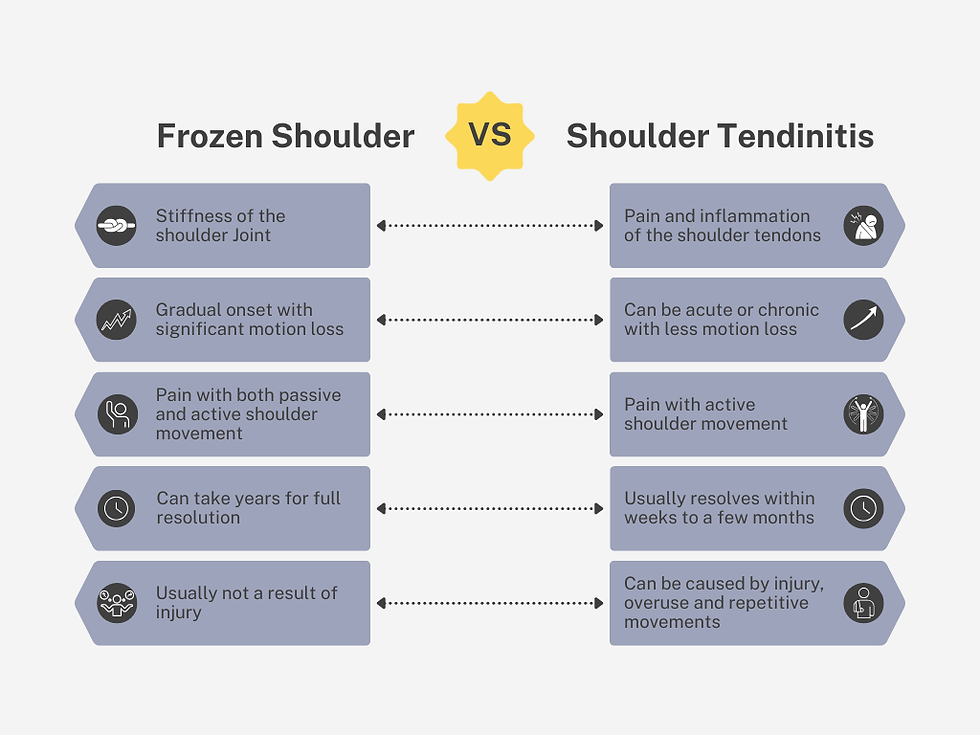
What Is Frozen Shoulder?
Frozen shoulder, also known as adhesive capsulitis, is an inflammatory condition where the capsule around the shoulder joint becomes inflamed, then thickens and stiffens. This leads to persistent stiffness and loss of shoulder motion. Frozen shoulder usually comes on slowly, and recovery is also a slow process, with some people experiencing varying levels of pain and loss of motion for years, even with treatment. Frozen shoulder has three different stages:
Freezing Stage: The shoulder gradually becomes increasingly painful and stiff. This can last from 6 weeks to 9 months.
Frozen Stage: Pain may decrease but the stiffness remains. Moving your shoulder in all directions is quite limited. This stage can last 4 to 12 months.
Thawing Stage: Gradual return of mobility. This stage can last from 6 months to over 2 years.
Common Symptoms:
Gradual, persistant pain and stiffness
Increasing stiffness and loss of normal range of motion in all directions
Pain often worse at night which cannegatively impact sleep
Causes:
Sometimes frozen shoulder begins after an injury to the shoulder and a prolonged period of shoulder immobility, such as surgery. In many cases, frozen shoulder seems to happen without any clear reason.
What Is Shoulder Tendinitis?
Shoulder tendinitis and frozen shoulder are often mixed up because both cause shoulder pain and limit shoulder movement, but the cause is not the same. Unlike frozen shoulder, shoulder tendinitis is a problem with the tendons of the shoulder, where they become irritated or inflamed, usually from overuse or repetitive movements. The severe stiffness and global loss of motion of the shoulder joint are also absent in shoulder tendinitis. Recovery from shoulder tendinitis tends to be much quicker and, with prompt management, people can recover in a matter of weeks to months.
Common Symptoms:
Point tenderness or pain over the affected tendon(s)
Pain is often worse with certain movements, especially reaching overhead or behind the back
Mild stiffness, not as severe as with frozen shoulder
"Weakness" that is more often the result of pain avoidance, not true weakness of the muscles
Causes:
Shoulder tendinitis can be occur more as we age and our tendons begin to lose some strength and flexibility. It is also common in people who need to perform repetitive arm activities, especially overhead activities like swimming, tennis, or painting.
Who Gets These Conditions?
Frozen shoulder tends to affect people in their 40s to 60s, and it’s especially common in women of perimenopausal age. In Cantonese, frozen shoulder is even called "五十肩” or “fifty shoulder” because of the common age it appears! People with diabetes, thyroid problems, or those recovering from recent shoulder injuries or surgeries are also at higher risk. Some research suggests higher rates of frozen shoulder among people of Asian descent.
Shoulder tendinitis also affects people over the age of 40, as tendons naturally lose elasticity, but tends to affect men and women equally. Many younger people also experience shoulder tendinitis at some point, and it is estimated that 30% of the population will experience shoulder tendinitis in their life. Athletes and people with jobs requiring a lot of heavy lifting or repetitive arm movements are also at increased risk. Diabetes, high cholesterol, and being overweight may predispose people to developing shoulder tendinitis.
Treatment Options
Rest & Activity Modification: Give your shoulder some time away from painful activities but it's important that you don't stop moving all together or the stiffness and motion loss could get worse
Rehab Stretches & Exercises: Progressive stretches and exercises to restore strength and flexibility
Shockwave Therapy: Can help reduce pain, break down scar tissue, reduce inflammation and promote your body's natural healing response
Medication: Pain and anti-inflammatory medication can help to manage your symptoms. Steroid injections might also be considered
Surgery: Occasionally, frozen shoulder pay need surgical intervention if conservative treatments do not work
How Chiropractic Care Can Help
Chiropractors can help directly with addressing shoulder problems such as frozen shoulder and shoulder tendinitis through many of the treatments listed above, but can also address secondary conditions that arise as a result of your shoulder pain. Neck and upper back pain are common in patients with shoulder problems; this is often the result of altered posture and overuse of neck and back muscles to compensate for limited shoulder function. These spinal issues could have also contributed to the development of shoulder problems through postural changes, nerve interference, and altered shoulder function.
Chiropractic Adjustments: Manual adjustments can help your shoulder joint move more freely and should be tailored to your stage of healing. Dhiropractic adjustments of the neck and back can also address joint and nerve issues that may have contributed to your shoulder condition or developed as a result of it.
Soft Tissue Therapy: Massage, assisted stretching and other hands on techniques can help relax tight muscles, reduce adhesions and support healing.
Rehabilitation Exercises: Personalized stretches and exercises to restore strength and function, and help prevent future problems.


.png)
Comments